Voices named after fruits
Pick the audio voice, like Clementine or Lemon, and listen to samples first, in the app and on the web.
On your phone, share a video or article with Sumus; on a computer, click Extract on the Chrome extension’s tab. Within moments, the summary arrives as text and audio. In the app, you listen to everything back to back, with the screen locked, on headphones or in the car.
Free, with 150 credits a month. No card.
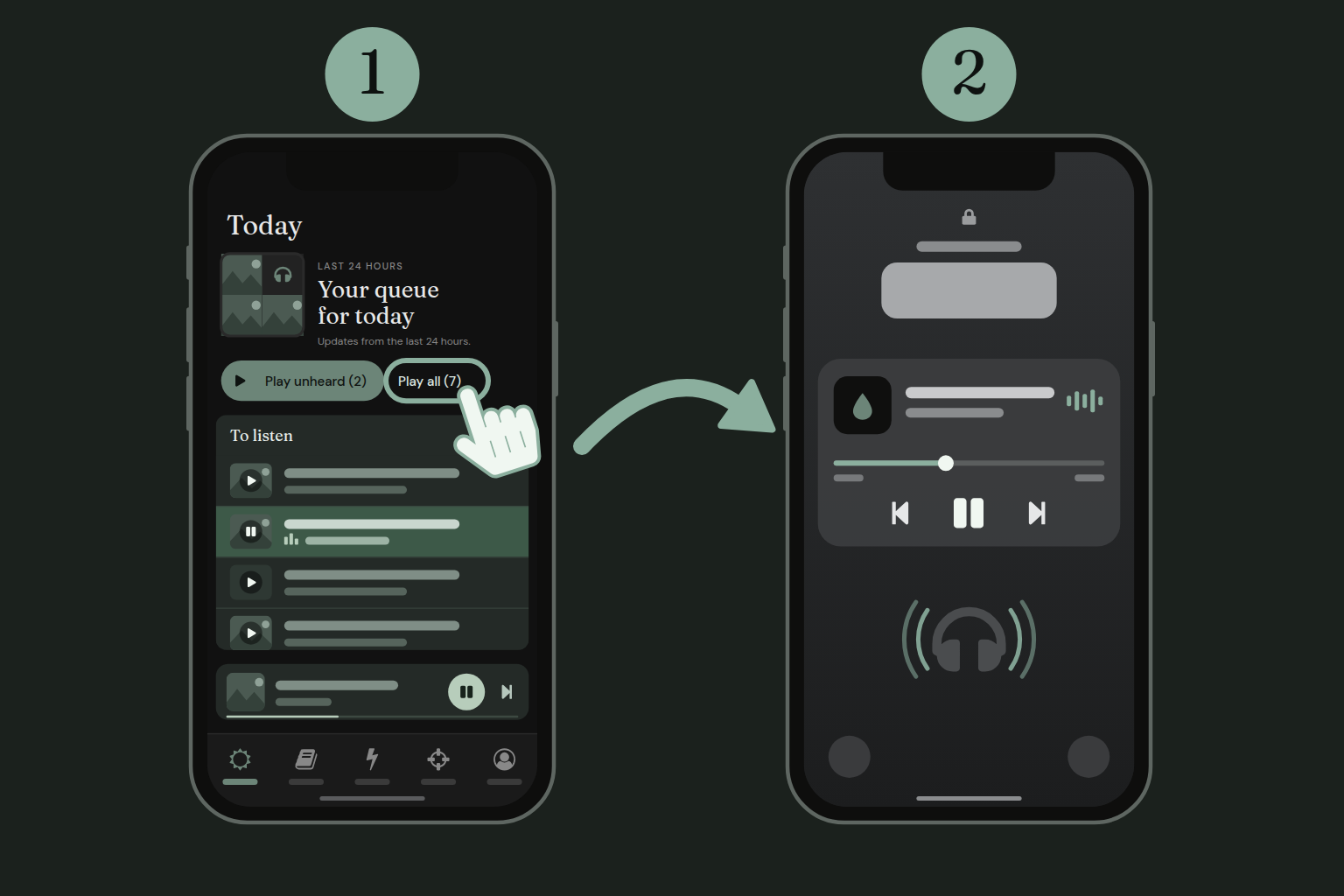
On the Today tab, tap Play all: the day’s summaries play one after another. You can pause and skip from the lock screen or your headphones, and on iPhone Sumus shows up in CarPlay.
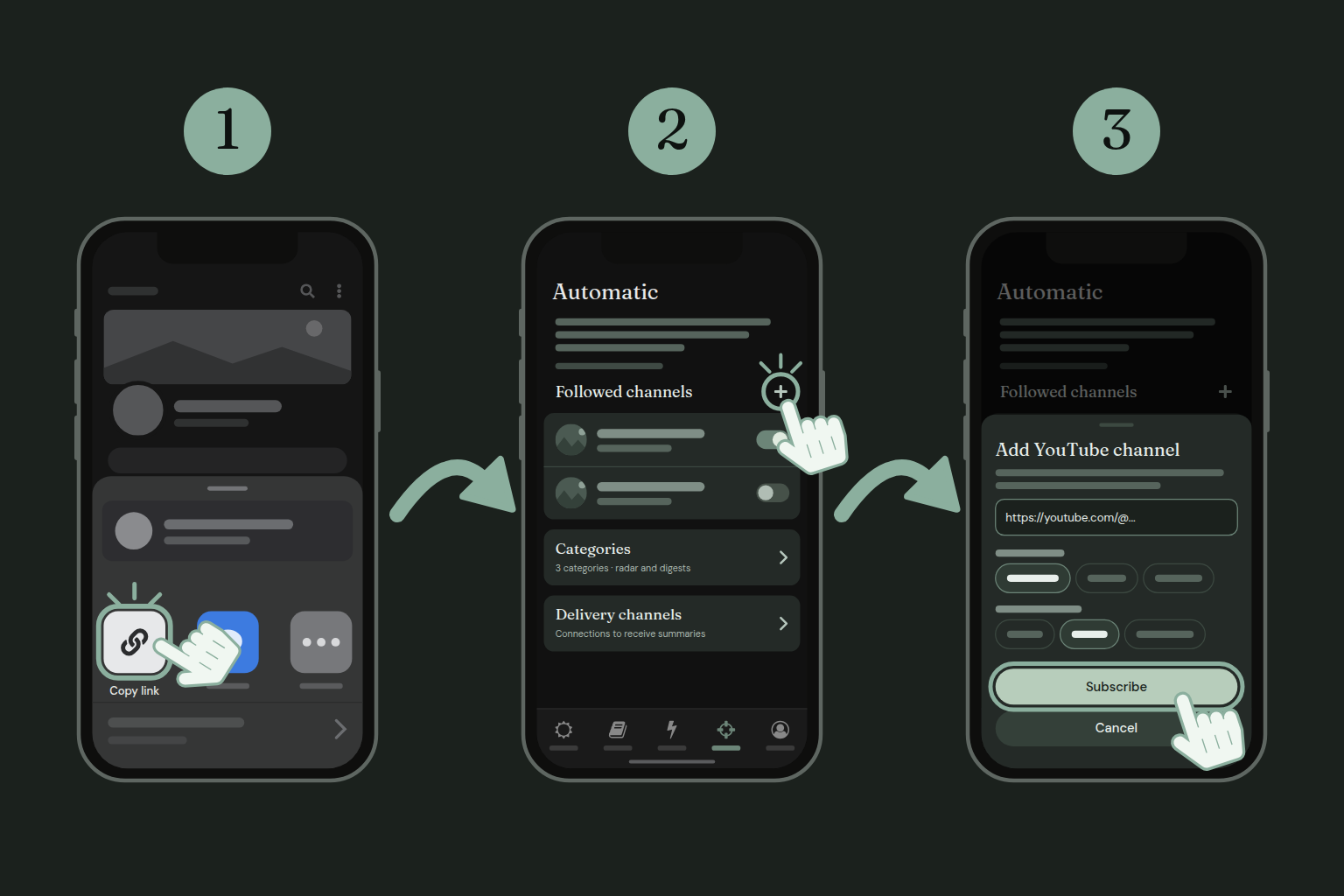
Follow the YouTube channels you watch and every new video becomes a summary on its own, delivered on WhatsApp, Telegram or by email, as text and audio. Each channel can have its own language and concentration, and you can pause it anytime.
Pick the audio voice, like Clementine or Lemon, and listen to samples first, in the app and on the web.
The summary and the audio come out in the language you choose, out of 13, whatever language the video or text is in.
The audio can arrive on WhatsApp or Telegram, along with the text, and stays in your Library.
Concentration sets the length of the audio: from the full picture with context to just the thesis. You choose before summarizing, and your default is saved.
| Level | Length | What stays |
|---|---|---|
| Diluted | The longest | Context, examples and the line of reasoning |
| Natural (default) | In between | The main points with the context they need |
| Concentrated | The shortest | Just the thesis and the data |
The video Why Socrates Hated Democracy, from The School of Life channel, runs 4 minutes. Press play and hear the summary at each level, exactly as it came out of Sumus, unedited.
Socrates and Democracy
Ancient Athens’ prestige can obscure Greek philosophy’s suspicion of democracy. Plato’s Republic has Socrates compare governing a country with commanding a ship: leadership should go to people who understand navigation, not whoever chooses the leader. Voting is likewise a skill requiring education, not an instinct automatically possessed by every citizen.
His concern was sharpened by trial in 399 BC Accused of corrupting Athens’ youth, he was judged by 500 Athenians, found guilty by a narrow margin, and sentenced to die by hemlock. He was not conventionally elitist: voting was not reserved for a permanent minority, but should be guided by rational, serious reflection.
He feared demagogy, illustrated by charismatic Alcibiades and an imagined contest between a doctor and a candy seller. The doctor offers painful discipline for people’s benefit; the seller promises pleasure. Voters may prefer simple attractions over difficult truths, producing “candy sellers” instead of “doctors.” Democracy is therefore only as sound as the education surrounding it.
Socrates and Democracy
Democracy, Socrates argued, is only as sound as the education surrounding it. Without informed judgment, elections can reward appealing promises over difficult measures intended to help citizens.
Socratic Critique of Democracy
Summaries generated on October 27, 2026.
Every summary stays in your Library, on the web and in the app, with text and audio. Over time, it becomes your record of what you’ve listened to.
No. You get both formats and use whichever fits the moment.
Yes. In the app, the audio plays in the background, with controls on the lock screen and your headphones.
Yes. On iPhone, Sumus shows up in CarPlay, and Play all plays the day’s summaries back to back.
In the summary’s language, which you choose out of 13, whatever language the content is in.
Yes. YouTube videos and web pages become summaries with audio the same way.
The free plan has 150 credits a month, no card; a short summary with audio uses 13. Paid plans start at $7.90 a month.
Use on the WebInstall on ChromeDownload on the App StoreGet it on Google Play
See also: summarize a YouTube video · summarize an article online · Telegram, email and WhatsApp